Showing posts with label usa. Show all posts

Saturday, June 5, 2010

"Luka" by Suzanne Vega (1987)


Is it really possible for an artist to release one of the worst songs in the world and one of the best songs in the world on the same album – in fact, back-to-back as the first two tracks? Well, if you're a New York folkie, undeniably talented yet sadly precious, clever yet too-clever-by-half, sensitive and senseless, it's possible. In short, if you're Suzanne Vega, it's possible.

They like to talk about the evolution of pop (or 'rock') lyrics in the 1960s, how Bob Dylan led music away from the so-called 'moon in June' style of lyrics to something more powerful. Superficially, that's true – but all I can say is that there are different types of 'power'. There were certainly moving lyrics before Dylan, and Dylan operated on a plateau that, while stunning, perhaps didn't always offer the most direct access to the listener's heart. I don't think Dylan would see that as the point.

One of the many things that good lyrics can do is tell truths that can't be told in a spoken voice: when wedded correctly to melody, well-written words can take on a second layer of meaning entirely absent otherwise. This is why poetry and lyric writing, while obviously related arts, are ultimately distinct.

The jangling guitars, those closely-miced drums, that keyboard-imitating-a-marimba that serves as the main instrument – all these things put the song unquestionably in the mid-80s. Without them, Suzanne Vega might just be any folkie-out-of-time. But I don't know if folkies were actually brave enough before Suzanne Vega to stare child abuse in the face like this, unflinching, courageous.

It's easy to be preachy about child abuse, to condemn the abusers and to turn the victims into faceless charity cases: soapbox stuff. Don't get me wrong: I like my righteous indignation as much as the next person, but this is something altogether more impressive: written from the perspective of the abused child, the lyrics make every effort to hide the abuse, to apologise for the abusers, to say 'it's no big deal' – all clearly illustrating without ever needing to directly say just how big a deal it clearly is. Suzanne Vega's plainspoken delivery underlines this. This is no heart-swelling, overwrought performance. This is something altogether more subtle, and as a result more direct. It's all very moving.

The other thing that makes this different from, and truer than, a more ham-fisted approach to the topic is the fact that there's no resolution. As the song ends, Luka's not been saved from his destiny, the parents (about whom we know nothing really) haven't gotten their just desserts, no victory has been proclaimed. All you get is Luka's desperate cry to be left alone: 'just don't ask me how I am'. Those neighbours' doors will continue to hide scenes of torment and torture. All Suzanne Vega has done is remind us that such things really do happen.

And yet, a mere reminder is sometimes the most powerful thing you can give.


Reblog this post [with Zemanta]

Saturday, May 29, 2010

"Funkytown" by Lipps, Inc. (1980)


“Funkytown” proves something very rarely considered but widely accepted: that a strong composition absolutely transcends genre and era. “Funkytown” is one of those very rare things in music: a universal. What I mean by that is that, technically, it's a late-era disco/pop cross-over, and technically it is from that grey area between the 70s and the 80s (chronologically, I mean: though sonically that's appropriate too), having been released in January 0f 1980. But none of that matters: I have a feeling that if you played it in the roughest C&W honky-tonk bar, somehow it would be accepted and loved. Why? Well, one thing about the song is how completely unassuming it is: not a drop of attitude or bad vibes. It's just a simple, breezy pop song with no agenda whatsoever. So no reason to dislike it, right? More importantly though: it's just a well-crafted song, packed with incident. It has that timeless keyboard riff, it has those guitars in the chorus. It had a chorus, and verses, and linking bits, and it progresses from one part to another with an indisputable logic. It was catchy and it was fun. It wasn't wildly funky, but it had a touch of the funk – enough to justify the title anyway. Still, it made people feel funky while listening to it, and it's one of those songs that lets people dance as badly, and un-self-consciously, as they want: without delving too heavily into cliché, it does take people to... well, to a place where music is fun and you can enjoy it without pretense.

It fit, decades later, into the sountrack of a cartoon, Shrek 2, with absolutely no difficulty whatsoever. With nothing changed or updated, it was suddenly a 21st century kids' song. And why not? All things to all people, there is nothing “Funkytown” can't be, no shape of a hole this square peg won't fit effortlessly into.

Reblog this post [with Zemanta]

Saturday, May 22, 2010

"Crazy in Love" by Beyoncé feat. Jay-Z (2003)


Jay-Z and Beyoncé actually made two back-to-back wonderful songs at the time: I have a soft spot for “'03 Bonnie and Clyde”, but the sad fact is that it consists of a 2Pac song whose lyrics the duo clearly didn't understand and a Prince song whose lyrics they clearly didn't understand. It's like they Googled 'girlfriend' and made a track out of the songs that showed up. But it's a hip-hop song built around an acoustic guitar riff, and how cool is that?

No acoustic guitars in this song, mind you: none of that soft-focus hippie stuff at all. If pop is meant to be bold and brassy, than this is a pop masterpiece. Scientists need to be studying this song, in order to discover the effortless way that the energy Beyoncé and the production team bring to it gets transferred, across radio waves and speaker wires, to the listener. As methods of energy distribution go, it's way more effective than a world of pipelines or power cables. I think this song could wake people from comas and put wheelchair-bound grandmas on the dancefloor. Not only is it infectious, but it's actually generous with its energy and sunny positivity, as if Beyoncé were strutting down the street in the middle of a parade, throwing armfuls of energy at the passers-by. There is no darkness here, no moodiness or aggression: it's just a celebration of love, of happiness and of positivity.

And it does so with one of the weirdest backing tracks I could imagine: an over-the-top horn sample looped into infinity, a cowbell-heavy rhythm loop that sounds like it's come from some island dance party. I think one of the main ways that the music – or at least the pop music – of the past decade will be remembered is through its willingness to create songs, and insanely catchy songs, out of the weirdest combinations of musical detritus. It's music designed for people who load their iPods with all manner of different kinds of songs and then listen to them on 'shuffle' mode. This is what pop music is today: an iPod on shuffle mode, condensed into a single song. Which is what makes it so great, and why for me the first decade of the 21st century is one in which the songs that were the most popular very frequently also happened to be the ones that were the best.


Reblog this post [with Zemanta]

Saturday, May 15, 2010

"Thank You for Talking to Me, Africa" by Sly and the Family Stone (1971)


What is funk? I think it's one of those things that aren't really easily defined, but when you encounter it, you know it. Obviously, James Brown holds the patent. Even if funk wasn't entirely a one-man creation, certainly he's the touchstone from which all funk derives. His journey from soul man to funk viruoso in the late sixties and early seventies is an inspiring and awesome one.

But I think you could argue that it's not actually the most illustrative journey into funk. For that, one needs to turn to Sylvester Stewart. Stewart, who rechristened himself Sly Stone, was a music insider in San Francisco, working behind the scenes, before launching his own career. It's interesting to think that such a charismatic frontman originally kept himself out of the limelight. It's seen as revelatory that his band, the Family Stone, was mixed-race. I'm not so sure that it is, really. After all, you can't hear skin colour on a CD, and I don't even know – or care to know – whether it was the drummer or the keyboardist who was white. You know, whatever. What does matter, at least for the early years of the Family Stone, was the way their music arguably fused what was popular in 'white music' and what was popular in 'black music' – in the 60s, they weren't very distinct things either, with all kinds of cross-pollination, but Sly and the Family Stone played just as readily on 'R&B' stations as on 'rock' stations.

More importantly, they were jubilant. Ecstatic. Happy, carefree music: righteous, yes, but righteous in an idealistic way. Positivity, in music and in message.

Things got a bit different with 'Thank You (Falletinme be Mice Elf Agin)', the unfortunately retardedly-titled song that forms the linchpin between 'early' Sly and 'late' Sly. It's somehow upbeat and downbeat at the same time. It's somewhere between the sunny-optimism of the hippie-era sixties and the more strident realism of the more radical early seventies. And, just as importantly, it's still sixties pop, but it's becomeing a deeper and deeper funk: just listen to that bass. That's funk. That's where James Brown lives.

Or...

After that single, Sly and the Family Stone apparently fell intol a drug-induced haze that made it tough as nails to actually get an album released. It took a few years – which was a few lifetimes back then – for them to produce There's a Riot Goin' On, with its iconic, red-white-and-black American flag cover. The fifty stars have been replaced by suns, but there's nothing sunny here. This is deep, dark stuff. To say it's drug-induced is missing the point: of course it's drug-induced. So was everything they did in the sixties. Just different drugs. Or, perhaps, different reactions.

This album takes funk into, arguably, a deeper and darker place than James Brown ever went. And the highlight, the centrepiece, is a rerecorded version of that very single. This time, it's seven minutes long, slow, narcotic, messy, but undeniably funky as hell. Whatever Sly and the Family Stone were on, it wasn't peace-and-love pills. But that doesn't make this music depressing: it's not. What it is is intoxicating, addictive... the bass played by Larry Graham is so effortlessly funky that it's stunning. He's not doing much here, but whatever 'funk' is, he's exuding it with every slap of a bass string. Everything else is merely wrapped around that amazing bass, and it's all as sloppy as possible: it's still a communal sing-along, but no one is listening to each other really. The guitars are not exactly chicken-sctratch, but they are abrasive: not musical at all, really. And all over the place...

How does this song work? With its messy and depressing constituent parts that barely cohere, how can the result be so affirming, so exciting and so thrilling? Well, whatever funk is, I suppose it is at its core truly a mystery. Or a form of magic, maybe.


Reblog this post [with Zemanta]

Saturday, May 8, 2010

"Präludium" by Jay (1997)


You know, it may be true that there are a certain number of songs whose praise is universal enough to be considered 'objectively' great songs. I'll never go wrong, or find people who disagree with me, if I fill his blog with the likes of 'Strawberry Fields Forever' or 'That's All Right Mama'. And they have their place here too, but ultimately this is my list, and the only criterion that matters is whether or not I like it. So that can lead to songs as obscure as this one.

I don't really know anything about this. It comes from a Def Jam release, so it's not exactly an obscure indie thing. The album also includes LL Cool J and Warren G on it, so again... seemingly high profile. But try finding anyone who's ever heard of it.

It's called The Rapsody Overture, and the terrible pun of the title comes from the fact that it's a various artists record of hip-hop / classical crossover stuff. Potentially horrible stuff, and a good amount of the songs on it are pretty bad. This one, however, is something the others aren't. Or rather, it isn't something the others are: overblown and ostentatious. Most of the other rappers on the collection seem to have felt that 'opera', or 'classical music' more generally, meant an exotic and wailing variation on the 'female voice to sing the chorus' cliché, with cheesy synthesised approximations of the musical score as background music. And then business as usual rapping over the top.

It's by Jay, and I have no idea who that is... it's not Jay-Z, who got his start at tround this time, but I have no information at all on him, and he's afforded two tracks back-to-back on this collection. Anyway, Jay takes Bach's Präludium #1 in C major from The Well-Tempered Clavier, the piece that would later become Ave Maria, as his starting point. It's not a symphonic piece, and it's not an opera piece. It's a two-minute long composition for piano (there also feature strings, probably synthesised, that may or may not appear in Bach's original; anyway they're understated). Beautiful, yes, but more importantly: simple. Understated, in fact. Jay takes this two-minute piano piece and, amazingly, resists the urge to pile stuff on top. A simple beat, slow, and his rapping. The track peters out as Bach does, and that in itself is remarkable: who's ever heard of a two-minute rap song?

Jay finds a kind of pathos in Bach's piece. He tells it as a story of two childhood friends who have fallen on wrong sides of gang warfare, and the narrator is tipping off his former friend, as a final favour, that he's 'getting touched'. Bach gives this tale a mournful, wistful finality. There's no anger, no resentment, no aggression. Not even regret: just a quiet, resigned tip-off and goodbye, in the same breath. Bach's piece has a beautiful ending, and Jay's song ends the same way, with a simple melodic turn and a satisfying resolution of the song's principal chord: a tiny ray of sunshine, perhaps, but a bittersweet one. The illusion of happiness, or peace, perhaps. Truth be told, there's none here. The best possible solution is that the childhood friend disappears, never to be seen again.

Gang culture is so mythologised partly because it is brutal barbarism dressed up in the must cultured of clothing. There's a reason gang life associates itself with the arts, with high culture, and there's a reason we find ourselves attracted to the accompanying dichotomy. In avoiding histrionics and going for simple, naked grace, Jay alone on this Def Jam vanity project understands.

A note: I found, a few weeks ago, much to my pleasure, that someone had uploaded this song onto YouTube. It racked up barely more than 1000 views. Now, YouTube is swimming with copyright violations. Huge uploads with millions of views use popular mainstream songs without permission, and get away with it. Here, this barely-viewed upload of an obscure song that is almost certainly out of print anyway... It's the one that gets yanked for copyright issues. Sigh. I have no idea why. But as I've already composed this entry, it'll go ahead. In its place, I present "Ach So Fromm", the other Jay contribution to the soundtrack. And my disappointment at UMG's pointless behaviour.


Reblog this post [with Zemanta]

Saturday, May 1, 2010

"Everyday" by Buddy Holly (1957)


There is a list waiting to be made of history's best-ever b-sides. While 95% of all singles have filler on the b-side, there is the odd case where a great a-side is accompanied by a great b-side, or where the b-side is actually better than the a-side. Buddy Holly's "Peggy Sue" is justifiably famous and iconic, being a simple enough vehicle for Holly's hiccupping overlaid with some of the most amazingly propulsive percussion on a rock-and-roll song and a creative guitar solo. But flip it over, and you get this.

What is this? Well, it's a lullaby, a fragment of a dream. Such a simple and elegant song that it feels like it would shatter to a million pieces if you dropped it. Wistful and filled with memories of a time long gone, but in this case not an artificial-sepia forced recollection of sock hops and ice cream parlours but something more genuine: a simpler time, the innocence of childhood. Or maybe that's just my memories of the movie Stand by Me talking.

There's an acoustic guitar and an upright bass here. But what really matters are the other two musical ingredients: that heavenly celesta, that confidently carries the entire song, building its etherealness on, contradictorily, a steady foundation. It's not the most versatile of instruments, but here it gives the song all the qualities I cherish it for: its dream-state, its gentleness. The 'percussion' is apparently Buddy Holly's drummer slapping his legs. Not artful, certainly, but it suits the song just fine: a heartbeat, a pulse. It keeps the rhythm and does nothing else.

Buddy Holly's lyrics are certainly not very profound. Simple love stuff, witnh a reference to a roller coaster. But his vocal performance is beautiful, entirely fitting the mood, hiccups and all, and carrying a melody that makes perfect sense, flowing with a very particular logic that still doesn't diminish the album's dream-state. A tiny little moment of peace and quiet, one to cherish in the privacy of your own solitude.

(Note: it does bug me that the title of this song proves people have been confusing 'everyday' and 'every day' for half a century now...)

Reblog this post [with Zemanta]

Saturday, April 3, 2010

"You Don't Own Me" by Lesley Gore (1964)


What a curious thing Lesley Gore is. Or rather, her recorded works. From the perspective of 'analyses of the relationships between boys and girls', you could put together a whole Ph. D. dissertation from merely reading her lyrics.

Lesley Gore was a teen singer in the 1960s who recorded her first hit at 16 years old. Her music (and her hair) is very much of the pre-Beatles 1960s, and much of it is disposable fluff. Of course, she wasn't a songwriter: primarily, she puppeted the words put in her mouth my men much older and much maler than her. So the fact that Lesley Gore came out as gay long after her glory days doesn't mean very much in consideration of these boy-crazy lyrics; if anything, all it provides is a certain ironic distance from these lyrics.

Lesley Gore's first 'classic' hit, 'It's My Party', isn't that noteworthy, really. The tale of a girl betrayed by her boyfriend on her birthday, it's a cute enough sob story that says little about male/female relations. Its follow-up, 'Judy's Turn to Cry', however, is a shining example of all that's backwards about 1960s gender politics: in it, 'Johnny' comes back to our heroine, and is of course welcomed back with open arms. The spiteful laughs fall squarely on the shoulders of Judy, the temptress who wooed Johnny away. Johnny here bears no fault for cheating on his girlfriend: he's merely the grand prize in a bitchfest between the evil harpy Judy and the sweet singer of the song.

It gets worse: 'That's the Way Boys Are' excuses her boyfriend's leery, unfeeling and abusive behaviour as merely an unavoidable consequence of his gender. 'Maybe I Know' explains away and defends her boyfriend's adultery: despite his deceit, he loves me. I know he cheats on me, 'but what can I do?' All Lesley Gore is left to do in this rather horrible tale of female powerlessness and tolerance of male indiscretions is hope that 'maybe one day he'll settle down'.

So how to explain the present fabulous song? Musically, it's gorgeous: mid-tempo, with strings tastefully hiding behind some kind of echoed idiophone, a large room with minimal decoration, leaving plenty of space for an 18-year old to combine youth and experience in a pretty powerful vocal performance that keeps the words the centre of attention.

And the words are amazing: impressive even today, downright radical for 1964. It's a brilliant declaration of independence from a girl with an overly controlling boyfriend. The message is clear, and stated in a masterfully direct language that loses none of its poetry or power through its simplicity and directness: don't treat me as if you own me; you don't. One can imagine the singer tearing into this guy in righteous indignation after being on the recieving end of one command too many.

The song (written, surprisingly yet unsurprisingly, by two men) is all the more impressive in light of the 'boys are animals; what can we do?' theme of Gore's other hits. It was held to #2 by 'I Want to Hold Your Hand', the song that heralded the dawn of Beatlemania. So as the Beatles were radically rewriting generational relations, this little salvo for gender equality played its own part in the changes that were in the air.
Reblog this post [with Zemanta]

Saturday, March 6, 2010

"All That I Got is You" by Ghostface Killah feat. Mary J. Blige (1996)


Why is is that violins are able to push the limit between sentimental and maudlin so? The simple eight-bar sample of piano and strings, taken from a Jackson 5 song and played over and over and over, ought to be a sentimentality overdose. It ought to be tacky. Yet somehow it pierces the heart, just enough for Ghostface's words to pour in.

The Wu-Tang Clan was, in retrospect, a collection of talents so varied that some of them would never have gotten near a mic on their own (solo) merits while many of them were revolutionary in their own way. Their business plan was amazing, as was the fact that they were able to work at a pace like this - with, at its peak, a new RZA-produced release every two or three months. Obviously the quality was not 100%, but it was still remarkably high. Like most 90s hip-hop, a Wu-Tang related release would have upwards of ten songs that you'd never need to hear twice. But the remainder... if marketing considerations could ever allow for it, a real Wu-Tang 'Greatest Hits' album might just be one of the best CD collections ever. And it would most certainly have to include this song.

Ghostface, as he would ultimately shorten his name: a ghost. Something that skirts on the edges of reality, not always easy to see. On the Wu-Tang début, Ghostface Killah seems like one of the more marginal of the background players. He doesn't seem like a star at all. And in fact all these years later when he's managed to outshine any other Wu-Tang, he still doesn't seem like a star. He has a curious work ethic wherein he seems to keep recording out of a need to do so more than out of a need to be famous. His best stuff is quite subtle.

Like this curious creation: lengthy film quote, one super-long verse rapped by Ghostface start to finish with no pause or interruption, a 'verse' (if you want to call it that) sung my Mary J. Blige, some stoned babbling by an irrelevant hanger-on named 'Poppa Wu', nothing else. This process takes five and a half minutes. All that we've got in the background is that strings-and-piano sample over and over and over again. Ghostface's lyrical thrust is not quite MJB's, and neither are really complemented by Poppa Wu's, um, dissertation. It's three different songs that barely recognise each other. And one of those three is quite disposable.

Yet the result still never fails to bring out the waterworks. Ghostface's celebration of strength and resilience in the face of poverty is so heartfelt that you never for a moment doubt its autobiographical nature. Rappers are often very eloquent while speaking about their mothers, and Ghostface pays his mother a very touching tribute here.

Mary J. Blige is not playing the role of Ghostface's mother - his father leaving them is referenced only in passing, whereas it's the main point of Mary J. Blige's part. Ghostface's mother doesn't seem like the type to do drugs, whereas Mary J. Blige admits to it. I'm not sure if either party spent much time making sure they were on the same page, but it doesn't really matter. Mary J. Blige is a hell of a singer and she really performs here. This is pretty direct warts-and-all drama, tragic against the violins, where Ghostface rather brilliantly lets Blige and the strings carry the tragedy, so that his story can be truly effective while never actually using the language of tragedy. His story of strength in adversity is something that anyone who has lived with true poverty can relate to, and it ultimately says much more than Poppa Wu's 'sermon' at the end, which dissolves into a kind of stoned laughter that threatens to make a complete mockery of all that has come before, could ever hope to say.
Reblog this post [with Zemanta]

Saturday, January 2, 2010

"Brass in Pocket" by the Pretenders (1979)


The sound of self-confidence. This amazingly sexy track gets where it’s going not by being kittenish or by being coy or by being in any way demure. This song is sexy because Chrissie Hynde demands that you find it sexy. She doesn’t holler or scream, she doesn’t even try very hard. She just has a gleam in her eye and a confidence in her stride that removes all doubt.

Chrissie Hynde is interesting. By now she’s been unimpressive for so much longer than she was ever impressive that it’s difficult to remember how high she once flew. For years and years now it’s been just one of those revolving-door ‘bands’ (like The Cure) playing MOR that pretends to be ‘alternative’ merely because its singer used to be.

How alternative did she use to be? Well (despite being from Ohio and despite being even older than Sting) she’s filled with stories about hanging with the Sex Pistols, the Clash and all the whole British punk aristocracy. Yet this song, which was released in 1979 just two years after “Never Mind the Bollocks…”, has no relationship that I can see to punk music, sounding much cleaner and more musical. It’s actually difficult to pinpoint quite what genre this song is, and thus it can feature quite comfortably on almost any rock-centred playlist. While her vocals undoubtedly steal the limelight, it most definitely is a ‘band’ performance, and in fact the musical equivalent of that confident walk is really what makes the song so memorable: a simple guitar riff over a basic clip-clop rhythm section (with cowbell!) recorded at exactly the speed somebody would strut down the street, head held high.

The verses aren’t up to much, really. It’s all just a build-up for when we get to Chrissie delineating what parts of herself she’ll use to ‘make you see’, peaking in a great phrase where she sings, ‘gonna use my… my… my…’, baiting you into expecting something perhaps dirty, ‘imagination!’ she calls out, cool as a cucumber, and the joke’s on you because your imagination’s in the gutter.

She then points out what’s blindingly obvious, that she’s ‘special’, and a bunch of anonymous male voices (the remaining Pretenders, presumably) parrot it helplessly until she practically reaches out of the speakers, grabs you by the necktie (for this is a song from 1979, and thus you are wearing one, and a skinny one at that) and forcefully demands of your attention, “give it to me!”

Yes ma’am.

And we did, for several years more as she insisted on making further good music despite all kinds of tragedy in her band. Eventually, as must happen to all good things, she ceased being special.

Yet the amazing thing about having once been so clearly special is that the allure never truly goes away. It doesn’t matter if she never releases another good song; decades later when Chrissie Hynde dies, she will still be special.
Reblog this post [with Zemanta]

Saturday, December 12, 2009

"Will You Love Me Tomorrow?" by the Shirelles (1960)


Ah, youthful innocence. There are, and have always been, people who claim that this generation loses its innocence more quickly than the previous generation. Being now old enough to claim that if I so choose, I do wonder. I think that a lot of the perceived generational differences we claim have to do with our own shifting perspectives, not those of any given generation. As we slide into age-induced conservativism, perhaps we colour our own childhood memories differently, so that when we see a child today behaving more or less exactly as we did, we misremember our own youth and see today’s kid as more licentious.

Or perhaps not. Perhaps we truly are going to hell in a handbasket, morally.

To learn, let’s go back in time – way before I was born, before even my parents were old enough to worry about the sentiments expressed herein. I have no idea what age group the record labels presumed this was written for, but I suspect it’s the teen age group. Popular music is generally marketed to teens, and in 1960 I don’t think anybody marketed anything except movie soundtracks and big band music to adults.

So this is an experience meant for teens. The lead singer’s crystal-clear vocal performance is so filled with fear and anticipation that you suspect it really was recorded on the verge of her ‘first night’. The strings (an absolutely gorgeous use of strings) conspire to inflate the romance inherent in the event, but the singer is all about uncertainty. She is quite naïve, not very worldly at all, and quite dependent on her boyfriend for emotional satisfaction: all very pre-Kennedy era.

As Carole King’s lyrics, artful yet conversationally plain, explain, she is about to surrender her virginity to her boyfriend and is terrified that he’s just in it for the conquest and will disappear the next day.

In that light, almost fifty years seem to have changed nothing. Girls today – and if not at the same age group then at least in the neighbourhood – ponder the same dilemma. This girl is not married; this is not a ‘wedding night’ song. This event is happening in a bedroom in either her house or the boyfriend’s house, with the parents downstairs watching TV, unaware. They’re both young, emotionally unaware, yet going with it anyway.

And she’s looking for assurance. Perhaps the most explicitly female emotion there is, outside of motherhood, is the need for that ‘first sexual encounter’ to be a sharing and bonding experience for both of them. This is a need that men, particularly teenage men, are almost entirely bereft of. This is why it matters that the words were written by a woman, and an 18-year-old woman at that (addressing, no doubt, her songwriting partner and soon-to-be husband). In an era where older men were awkwardly putting insincere words into the mouths of teenage girls, this song is so completely legit because it’s written by someone who knows, who feels the emotions expressed in the words. This is virginal female sexuality laid bare, and though it might be filtered through a the lens of a more inhibited era, the emotions are just as raw and real as if they had been written today.

I hear this song with a bitter nostalgia: not for the era, which is almost a full generation before me, but for the age at which girls feel this way, and age that has now long passed for me.

And perhaps if I find myself judging the kids of today, it’s with more than a twinge of jealousy.
Reblog this post [with Zemanta]

Saturday, November 28, 2009

"Hot Burrito #1" by the Flying Burrito Brothers (1969)


I think I’m starting to understand country music. The ‘keening’ vocals are not meant to be conventionally attractive, so all those years I spent wondering what was attractive about the forlorn dog-whine, I was missing the point. In fact, the vocals on the best of country songs sound that way because it’s a more direct combination of form and content. The successful country singer’s voice breaks as his heart breaks, and somewhere in the process, we the audience are drawn into the drama. And, potentially, hooked.

If there’s any truth to this theory, it seems ideally best presented in the context of weepy country songs. Hoedown stuff, the ‘western’ half I suppose, I still can’t explain. Garth Brooks I can’t explain either.

And, as a further caveat, if there’s any truth to this theory, then I reckon the vocal melody is essential. A weepy country song without much of a melody behind it is just, well, annoying. The kind of thing that people who detest country imagine when discussing how much they detest country.

Which explains the miracle of this poorly-titled song performed by a poorly-titled band who were hailed as ‘country rock’ at the time for reasons I can’t fathom (this is all country, no rock, though granted its fraternal twin “…#2” does have a fuzz guitar on it): the melody. Gram Parsons sounds as if he’s at risk of crumbling to little bits like a dried clay sculpture at any minute, particularly when his melody tests his thin vocal talents. And yet it is precisely the marriage of his vocal performance to his vocal melody that gives you the feeling that you’ve entered this poor man’s head. Suddenly ‘weepy and self-obsessed’ becomes ‘profoundly universal’, and the words appear to be conveying a meaning much deeper than they truly are. (And why isn’t this song called “I’m Your Toy”?)

Some day they’ll make the movies they’ve been making about Ian Curtis now about Gram Parsons. And presumably they’ll be just as interesting. Just like 2Pac (there’s a comparison you don’t meet every day), Gram Parsons is perhaps accorded too much glory merely for dying young, but this particular rich kid did float ethereally through the music industry for a few years, inventing Emmylou Harris and giving the Rolling Stones the keys to the magical Credible Country Vault. Along the way, he wrote a handful of beautiful songs with indelible melodies, and sang them all with that voice that could be a torture instrument, but somehow manages to convince you that everything will be all right precisely because it so self-evidently won’t.
Reblog this post [with Zemanta]

Saturday, November 21, 2009

"Set Adrift on Memory Bliss" by P.M. Dawn (1991)


Does not compute.

We all know what hip-hop is. We all know what rap is. It’s testosterone, it’s aggression, it’s ‘hard’, it’s ‘raw’. It’s all about ‘keepin’ it real’. Verbal dexterity, the dozens, etc. etc. etc.

What it’s not is soft, sensual and dreamy. And it doesn’t sample Spandau Ballet.

Okay, nobody’s ever going to use the word “revolutionary” in reference to P.M. Dawn. By now, the word most people will use is “who?” The fact is, though, that P.M. Dawn showed us a new direction for music just as conclusively as N.W.A. did. The fact that N.W.A. launched a 10-year industry and P.M. Dawn bore the insults through gritted teeth for a few years before giving up the fight has nothing to do with the relative quality of those artists’ outputs and everything to do with public expectations. I like N.W.A., but they became famous by pandering to peoples’ expectations / fears of what rap, and young black males, should sound like.

I don’t imagine anybody saw this coming. Prince Be was a large man decked out in loose-fitting gypsy robes and dreadlocks. Apparently Christians, at this early stage they evoked no specific religion but just a kind of all-encompassing spirituality that gave Prince Be a sort of Buddhaesque demeanour. You got the impression that he would release mosquitoes back into the wild rather than kill them.

Additionally, he was something that, in 1991, a rapper could be, and perhaps even aspired to be: a ‘poet’. I don’t like that word much in describing lyricists, but this song and others of its vintage weave a pattern of images and turns of phrase in a way that nobody in hip hop is doing today and even back then few people attempted. He was also something that a few people were at this stage but nobody had been until that time: a rapper capable of singing, or a singer capable of rapping, and thus actually wrote songs as opposed to verses.

And then there’s the Spandau Ballet part of the equation. I mean, what, was this team of siblings sitting in their Jersey living room saying, ‘Who should we sample?’ ‘I know! Spandau Ballet! That’ll improve our street cred!’

But that early-eighties synthetic groove, over top of ‘Paid in Full’, somehow worked amazingly, as the result is soulful, seductive and spiritual: one of those hip-hop songs that would still be compellingly listenable as an instrumental.

That is, if this is hip-hop. Among avenues left unexplored, if P.M. Dawn had found more success and spawned more imitators (okay, in a sense it did, but the ‘positivity’ acts that followed wouldn’t necessarily credit P.M. Dawn as an influence so much as a coincidence), would it have wound up coalescing into a genre not called hip-hop but called something else? Listening to second-biggest hit “I’d Die Without You” (in no sense a ‘rap’ song) makes you wonder…
Reblog this post [with Zemanta]

Saturday, November 7, 2009

"Lodi" by Creedence Clearwater Revival (1969)


Creedence Clearwater Revival holds a strange place in history. Burning bright and quick, they left their legacy in a period of tremendous creativity measurable in months. Yet most similar ‘flashes in the pan’ blaze a revolutionary trail across history. CCR were hardly revolutionary; if anything, they’re reactionary. So why should we care about them all these years later?

It’s strange. They single-handedly created the genre of beer-commercial music. Those who follow in their footsteps tend to be agonizingly dull. On occasion they stumble into hokeyness, and frankly they never stray very far from it. John Fogerty sings all his songs in a hokey fake Southern accent and half of the time his lyrics seem like a Mark Twain book, or that painting with the old farmer couple and the pitchfork, set to music.

Yet they have a pure simplicity, devoid of any nonsense or pretense, that makes them actually quite nice to listen to. More importantly than that, they exhibit an instinctive sense of what pop music is and contain melodies that can stick in your head for ages.

“Lodi”, precisely nobody’s favourite CCR song, is such an example. Its melody is actually generated entirely by its chord pattern, and its chord pattern is practically twelve-bar it’s so generic. The melody ought to suck. Yet somehow, it doesn’t. The melody fits the chord pattern like a glove, the words fit the melody like a gloved-glove, and the whole thing chugs along with a curious combination of melancholy and breeziness. “Chug” is an important point. It doesn’t exactly “choogle”, which is a good thing since that’s such a terrible word, but its forward dynamics (which, incidentally, give the impression of constantly getting slightly faster – perhaps they do) push you headlong into the song and keep you there until it finishes.

Complaining about the life of a traveling band always seems a little bit too precious in rock music. What’s nice about “Lodi” is, while Fogerty’s clearly complaining, he’s doing it without pettiness but with a forlorn acceptance. It’s a curious emotional weight, especially for a b-side.

Which it is. “Lodi” was the b-side of “Bad Moon Rising”, also a great (and history will tell us ‘more significant’) song. The amazing rate at which Creedence was putting out great music during their two-and-a-half-year blaze of glory meant that songs as wonderful as this were getting chucked out on b-sides.

Amazing. Though nobody else on the planet will make this comparison, that rate of productivity recalls the Smiths. As does the commitment to ‘pop’ music at its purest.

And pretense, too.
Reblog this post [with Zemanta]

Saturday, October 10, 2009

"Black Steel in the Hour of Chaos" by Public Enemy (1989)


Being the age that I am, I missed several key 'Year Zeroes'. I wasn't born when Elvis, or Chuck Berry, or Ike Turner, or whoever it was who somehow magically 'birthed' rock and roll came out with whichever magnum opus was 'the first rock and roll song'. I wasn't alive for "I Want to Hold Your Hand" or "Papa's Got a Brand New Bag". I was alive for "I Feel Love", "God Save the Queen" and "Rapper's Delight", but just barely - and more interested in Ernie singing "Rubber Duckie" than any of the above.

One of the few true "Everything you knew is wrong" moments in music history that I can actually say I've witnessed is the release in 1988 of Public Enemy's "It Takes a Nation of Millions to Hold Us Back".

I think one of the main reasons I was slow to warm to rap music was that the early era of rap music was, let's face it, decidedly light on meaningful lyrical content. The music was great, the verbal dexterity was impressive, sure. But lyrically most of the rap that was on the radio in the mid-eighties was pretty vapid lyrically.

Or, more to the point, if there was any depth I wasn't hearing it. Rap was okay, but it wasn't compelling. Chick D, on the other hand, had both a voice that pulled you in and the lyrics to make you shut up and listen. Hanging out with my friends and a boombox, I can only remember once being absolutely stunned into silence with a rap song. It was this particular one, though it could have been almost any on this album.

It wasn't just that piano riff (sampled apparently from Isaac Hayes). Like so much of the Bomb Squad's work, it seemed annoyingly compelling, or else compellingly annoying at the time, but years later I see it as a great exercise in tension and release. More specifically, each of those repeated clashing chords steps up the tension, until the bar-ending piano line lets it out. And then over and over again.

And over again.

Six and a half minutes is crazy long for a mid-tempo rap song. The only real reason this song can go on so long is that Chuck D is telling a great story. Hell, it was revolutionary enough that he was telling a story at all, but this noir tale of a draft dodger breaking out of prison is just a good story. The black power rhetoric (here is a land that never gave a damn...) stunned me but in a way that somehow felt refreshing, exciting. It set up a tale that, while bloody and subversive, was profoundly righteous. Going through idealisms at a teenage rate as I was, that was highly impressive.

Lastly, sorry to say, "Black Steel" is brilliant because Flavor Flav's role is minimal. One of the more frustrating people in hip hop, Flavor Flav took solo pieces like "911 is a Joke" and made them compelling. He was a good rapper. Yet so much of his "Yeah boy-eee" shtick was tired that it actually regularly served to bring down everything Chuck D had built up. So here, absent except for verse-delineating 'phone calls', Flavor Flav is exactly as present as he ought to be.

Saturday, October 3, 2009

"96 Tears" by ? and the Mysterians (1966)


This tinny little recording is iconic for oh, so many reasons. They talk about how it started 'garage rock', or even punk rock. It gave a generation of people something to play in organ showrooms, and ? himself is even lauded as an early Hispanic American role model.

All of which is good and well. For me, though, the thing that's wonderful about "96 Tears" is how truly democratic it is. It's completely anonymous, so simple that anyone can play it, utterly devoid of alienating showboating or anything that a musical education could give you.

Yet it's indelible and it's immediate. It doesn't tell you the meaning of life, but it does lift your spirits. It's just fun. The fact that it's so anonymous that the band name is deliberately so is exactly the pont (as is their status as 'one-hit wonders'). There's a famous line that not many people bought the Velvet Underground's albums but all those who did started bands. I love VU, but I wonder if their intellectual freak-outs actually convinced as many people to think, "Hey, I can do this too" as this little ditty. It is easy to imagine this being the sound of any amateur band in any city in the world at any time since the 1960s. There are hundreds of bands in the world that sound exactly like this. Some will get better. Many won't. It doesn't matter because if ? and the Mysterians (whoever they even are) can come up with something lieke this, so can they.

Music is all about dreaming anyway. Bruce Springsteen made a career writing about it. These people probably only made a few hundred bucks but personified it.

Saturday, September 19, 2009

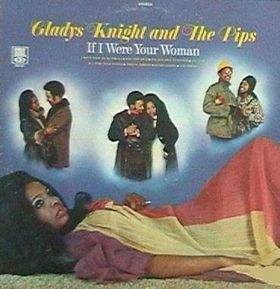
"If I Were Your Woman" by Gladys Knight and the Pips (1970)


Okay. I do admit it – my musical tastes have, on more than one occasion, been described as ‘gay’. It’s all good. I don’t happen to be gay, but as there’s no proven link between sexual preference and musical preference, all innuendo just washes off.

See, it’s all about the divas. I, you see, am a bona fide fan of divas. Not Mariah Carey – can’t stand her. Just the old school ones. Even at that, I am rather discerning with my divas. Allow me to elucidate.

I recently saw an ad touting a new season of “Canadian Idol” (the Canadian version of, surprise surprise, “American Idol”). Among the wannabes soundbited on the ad was a particularly histrionic woman screeching (as opposed to singing) “Come on and take it” (presumably to be followed, post-soundbite, by “Piece of My Heart”. We’re meant to watch and say ‘Hey! She can’t sing! She can only screech!’

People worldwide will hate me for saying this, but… That seems like a pretty decent imitation of Janis Joplin. I’ve never understood the appeal of Janis Joplin. She is, to me, what a diva should not be – aggressive, dissonant, indeed histrionic. What a diva should be… I’ve heard it said that power without strength is nothing. Having the pipes is nothing if you don’t know how to use them.

Observe Gladys Knight. With or without the Pips behind her, Gladys Knight can sing (so well, I’m tempted to spell it ‘sang’). To me, that means having a great instrument and having expert control over it. Diana Ross can exude personality, take you on a journey with the way she sells a song. But her pipes are not the most powerful. Aretha Franklin can tear the roof off of a church merely with her voice. But… wait. I can’t criticise Aretha Franklin – that’s a crime in certain jurisdictions. In any case, what Gladys has is the power and the glory. You can hear, or could at one point, an a capella version of this song on YouTube. It is a thing to behold. The girl can sing like hell. She’s broken hearted, she’s triumphant, she’s wilful, she’s dreamy. She sells it all so convincingly that you want to throttle the bugger that’s choosing some other girl over her. I mean, what, is he deaf?

There might be many out there who deride Motown and say that Gladys was at her best after Motown. I do know, especially from an instrumentation point of view, what they’re saying. But what Motown could do better than anyone out there is chain enough monkeys to typewriters that stunning compositions like this would come along often enough to keep everyone on top of their singles games (albums? Well… that’s what ‘greatest hits’ compilations are for…). In this particular case, the song is heartbreaking. The melody is as evocative as any screenplay and the dynamics tell as much as the words could ever hope to. For anybody suffering from a severe case of Jon-Cryer-as-Duckie-style unrequited love, this song couldn’t ring truer.

Difficult to imagine it happening to Gladys, mind you.

Lastly, the Pips, frankly more often an anchor than a set of wings, are perfectly fine in this song, staying to the background and making the gender-shift a little less annoying than it otherwise might be.

Thursday, August 27, 2009

"Mr. Jones" by Counting Crows (1994)


1994. My last year of high school and first year of university. "Alternative" music is as popular as it has ever been and ever will be. Kurt Cobain has just killed himself but Pearl Jam, Alice in Chains and God knows who else from Seattle are still there to keep up the overly serious moping.

I had spent my whole life listening to 'alternative' radio stations and watching 'alternative' video shows (yes, there was a time when non-music TV channels had 'video shows', just like they'd have a 'news broadcast'). This was a time for redemption! A time when my musical tastes were vindicated!

I was bored out of my mind.

Stuck in my university dorm with whiny white males shrieking at me on all sides, I became about as contrary as I could be. I responded by blasting out Neil Diamond and Johnny Cash - before they became cool, mind you, before Rick Rubin had 'rehabilitated' both of them in the minds of 'cool kids'.

I get no credit for my progressive music tastes...

Anyway, I was still very much into new music. There was a lot of new stuff I was digging and exploring at the time - both inside and outside the mainstream. Well, in any case, the 'mainstream/alternative' spectrum had been altered, and first-year university students are obsessed with being as 'alternative' as they can be (not just musically, of course), yet within that range I found myself with pretty catholic musical tastes.

Adam Duritz has found plenty of ways in the years since to annoy the bollocks off of me (dating Jennifer Aniston, for example). Yet this initial volley still inspires me. It's almost Dave Matthews Band or even Spin Doctors, and sooner or later it's bound to soundtrack a beer commercial, yet there is something real and genuine here. Wikipedia claims that Duritz suffers from dissociative disorder. I would have no idea about that, but if it's true, it would make a more than a little sense - or rather, this song might make a little more sense. I've never seen Counting Crows live, and if I've seen a video for this song it doesn't stick in my mind, but I imagine Duritz singing it in a kind of spaced-out reverie. He seems to be well in his own world here, emoting to and about his Dylan-rip-off acquaintance (note: if you're stealing your signature song's archetype from a Bob Dylan song, you might not want to actually say "I want to be Bob Dylan" in your lyrics). He doesn't quite take flight, but you sense that he performs this song without really any awareness of the people around him.

If it's so, that might be creepy, but it taps into something transportative about the best music that I constantly find myself looking for. Music should send the listener somewhere. It needn't send the performer somewhere, but if it does, it can create a bond between listener and performer - a bond, of course, later undone if the performer happens to be kind of a wanker. Adam Duritz is, clearly, speaking a load of rubbish here about whatever comes into his head ("Grey is my favourite colour; I felt so symbolic yesterday. If I knew Picasso, I would find myself a grey guitar and play") and I imagine listening to a dozen songs just like "Mr. Jones" would be a fresh hell. Yet as a one-off, as a novelty, "Mr. Jones" still works.

Thursday, August 20, 2009

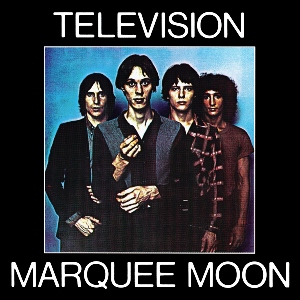
"Marquee Moon" by Television (1977)


Have you ever met the kind of music obsessive who seems dedicated to liking whatever critics like and hating whatever they don't? I've met a million of them - gritting their teeth while pretending to love Ornette Coleman, instinctively dissing anything by Britney Spears (some of whose songs are, in my opinion, great). I don't really get it, to be honest. I mean, just like what you like, right?

Having said that, however, I've been guilty in the past of taking critics too seriously - on more than one occasion buying an album without having heard a note just because critics seemed to like it. I have my requisite Velvet Underground and Sonic Youth CDs as well...

So, even though I would have been an infant and/or foetus at the time, I had, by my teenage years, educated myself enough about the CBGB 'scene' in New York to be able to fake it. I allowed myself to truly believe that a band like Blondie were in any way 'punk' (because CBGB was a proto-punk scene, right?)

I heard and loved the Talking Heads. I heard and liked Blondie and the Ramones. I heard and tried to like Patti Smith. I got the "New York 1970s" badge sewn onto my hipster-cred blanket. I knew, man.

Yet somehow Television eluded me. I mean, I'd read the magazines, so I knew who they were, but I'd never heard a song by them. Not until just a year or two ago, when finally I had the chance to hear this song.

By that point in my life, I was feeling rather bored with a lot of music. I found that, among current music, very little outside of the most mainstream pop moved me at all, and I found that I had pretty much no patience whatsoever for two-guitars-bass-and-drums - whatever the genre, if that was the instrumentation, it bored me.

Long wanking guitar solos bored me. Adenoidal male singers bored me.

Frankly, I wouldn't have expected to do anything but hate Television, even though the knee-jerk impulse to respect them because they were 'formative' or 'seminal' or whatever still remained. I won't say anything as banal as "they showed me the light" or whatever. After all, it was still just a song. Yet somehow, "Marquee Moon", two guitars, bass, drums, bad male singer, eleven minutes long, guitar solo more than four minutes long... somehow, unlikely as it is, moved me. Thirty years old, yet it still felt new. Seemed to suggest to me that you can do different things with two guitars, a bass and drums.

I'm not sure what it is actually. I'm not sure what seems so new or fresh. Perhaps it's the lack of pretense: the guitar solo goes on for minutes, but you never sense that the guitar player is arching his back and scrunching up his face like guitarists who are just so into the moment do. Perhaps it's the song's dynamics: the way it builds up and breaks down in a way that makes the minutes seem way, way less agonising than 10 minutes 40 seconds of, say, Phish would be. It could very well be that bass, flying all over the place unexpectedly (I love creative bass lines). Whatever it is, it hooked me. And it had been a long time since anything, especially guitar-based 'rock', had done that.

Although I still can't even begin to comprehend what on earth this possibly has to do with 'punk'.

Thursday, August 13, 2009

"Groove is in the Heart" by Deee-Lite (1990)


In deciding to make this list, I had originally toyed with the idea of itemising the 500 best songs ever, or something like that. I soon realised that that was a pretty bad idea, since it would involve major planning and organisation, and in the end, who cares if a song is 172nd best or 173rd best, right? So I decided not to list them in order.

Having said that, though, for this, my inaugural entry, I am including what I believe to be, without hyperbole, the best song ever. In any case, I’ve come to realise it’s my favourite song. And, at the end of the day, those are synonymous, right? I mean, you can’t really consider art and entertainment ‘objectively’ (try as you might). Roger Ebert may be able to justify his decisions till he’s blue in the face, but in the end a ‘thumbs up’ really just means that he liked the movie.

I like this song. Very, very much. For me, I think what is most wonderful about the song ‘Groove is in the Heart’ is its very generosity. There was something very giving and genuine about this song; not just the message of its lyrics but the ‘message’ of its music, its ‘feel’. The song, the band, the video… everything just seemed so completely accepting and open-minded. So much music, particularly ‘cool’ music, is filled with sneering and exclusion. With Deee-Lite, it really seemed like ‘coolness’ was being redefined to be as inclusive as possible. To cite a cliché, it was a party and everyone was invited.

And literally everyone… The band themselves were a slightly geeky Japanese-American, a slightly geeky Ukrainian-American and a glamorous American-born American. At a time when both Japan and the decaying Soviet Union were being cast by many Americans in the most xenophobic fashion possible, the simple image of these three people mixing it up together, not political in the ivory-tower sense but completely political in the personal-is-political sense. Special guests at their party included Q-Tip, leading light of the positivity style of hip-hop at the time and Bootsy Collins, funk bassist and over-the-top dresser extraordinaire. Special guest appearance, of course, by Herbie Hancock on exquisitely-utilised sample.

Except among true club kids and devotees, Deee-Lite were, for all intents and purposes, one-hit wonders. It’s amazing to shine this brightly this briefly. But perhaps it’s to be expected: they truly did throw everything they had into a single track. What remained to be said after this?

Defiantly optimistic, defiantly open-minded, defiantly sincere and defiantly ‘progressive’, I don’t think it’s possible to listen to this song and not feel uplifted. It’s 18 years later now, and the future they appeared to embody… well, it doesn’t really seem to have arrived yet. Still, though, listening to this song or watching the video gives you the sense – or perhaps merely the dream – that the better world they seem to represent is still coming. Sooner or later. One day…